
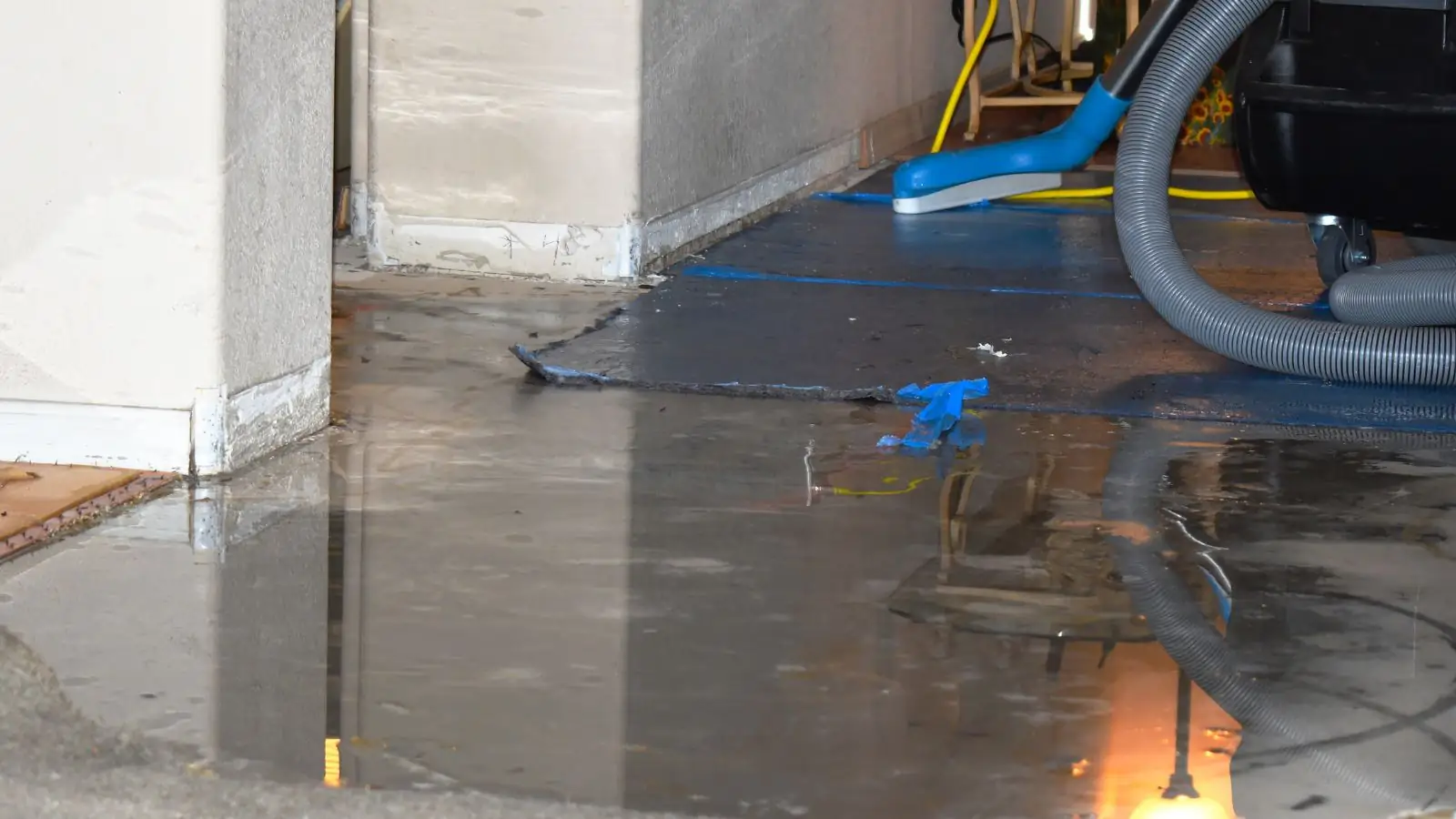
Emergency water extraction when time matters
.Water extraction means removing standing water from a building with pumps and extraction units so the structure can start drying. In Wasco it is usually the first job on any wet property, whether the water came from a split supply line, a water heater or creek overflow. This is an emergency service, and the 24/7 line is answered at night, on weekends and on holidays.
While you wait for the crew, stop the source if you can reach the shutoff, keep children and pets out of the water, and lift anything valuable onto a dry surface. Same-day response is the goal whenever crews are available, and after-hours calls get the same priority as daytime ones.
When standing water is an emergency
.Any water that is still moving or still rising is an emergency. So is any water that covers an outlet, a floor furnace or a garage panel. Do not wade in if the water is near live electricity. Call the power utility or 911 for a gas smell or a sparking outlet before you call us.
The numbers explain the urgency. One inch of water over a 1,000 square foot floor is about 620 gallons. Many homes in the valley sit on concrete slabs, so that water spreads flat and fast, soaks the bottom of every wall it touches and finds the next room within minutes.
Standing water does not wait
.Call the 24/7 line now and shut off the water source if it is safe to reach.
What the crew uses to pull water out
.The tool depends on depth and on what is under the water. Equipment is sized to the loss and not every machine runs on every job.
Submersible pumps
.Move the first few inches of standing water out of a garage, cellar or sunken room quickly.
Truck-mounted and portable extractors
.Vacuum water from carpet, pad and hard floors, down to the damp film that pumps leave behind.
Moisture meters
.Show whether wood, drywall and slab surfaces are still wet after the visible water is gone.
Thermal imaging
.Finds wet insulation and hidden pockets in walls so extraction does not stop too early.
Water extraction or something else?
.Use this as a rough guide to which situation you are in. A crew confirms it on site.
| What you see | .What it usually means | .Next move | .
|---|---|---|
| Water over the whole floor, still rising | Active supply failure or flooding | Shut off the main valve and call the 24/7 line. See flood damage cleanup if it came from outside. |
| Water pooled in one room after a leak stopped | Extraction plus drying | Extract, then dry. Do not wait for it to evaporate. |
| Damp carpet that feels cool and heavy | Water in the pad | Carpet extraction first. See carpet water damage for the tear-out decision. |
| Dark or smelly water | Possible contamination | Stay out. See sewage backup cleanup for Category 3 safety. |
What happens when the crew arrives
.Check safety
.Power, gas and water sources are checked before anyone steps into the water.
. Set up pumps
.Submersibles go in first for deep water, and hoses run outside or to a drain.
. Extract the film
.Extractors work over the floor to remove what pumps cannot.
. Read moisture
.Meters and thermal imaging show where drying must continue.
.
What not to do before the crew arrives
.Do not use a household vacuum on water, which risks shock and damages the vacuum. Do not use ceiling fixtures under a wet ceiling, and do not turn on power in a flooded room. Avoid walking through standing water in socks or bare feet since the water may be contaminated.
What changes the cost of extraction
.The scope is explained before work starts. These five factors set the number.
- Depth and areaInches of water multiplied by the floor area decides pump size and hours. .
- Water categoryClean supply water, gray water and sewage need different handling. .
- MaterialsCarpet, pad, hardwood and slab each extract differently. .
- AccessStairs, tight crawl spaces and furniture add time. .
- What followsDrying days and any tear-out are quoted separately, see structural drying and dehumidification. .
Insurance may respond to sudden and accidental water, so photograph the water before it is removed and ask your insurer what your policy says. Flood from outside is usually excluded. Want your real number? Call (844) 950-6900.
The standard behind the work
.The reference standard for professional water damage restoration is ANSI/IICRC S500. It sets out how water is categorized, how affected materials are judged and how drying is confirmed with readings. When you compare companies, ask whether the drying plan follows it and ask to see the readings.
Extraction in Wasco: what the water usually tells us
.Wasco is at the junction of State Routes 43 and 46 in Kern County, and NOAA climate normals for Wasco give about 6.8 inches of rain a year, mostly from December through March. Heavy winter rain and Poso Creek overflow bring outside water. The rest of the year, extraction calls usually trace back to plumbing and appliances.
So the first question is always where the water came from. Outside water carries silt and is handled as contaminated, and inside supply water is cleaner but spreads faster. Ask your city building department about any permit questions after a major loss.
Water Extraction questions in Wasco
.Yes. The dispatch line is open 24 hours a day, every day. Call, shut off the water source if you can reach it safely, and the crew is routed to your address. There is no promised arrival time, but after-hours calls are not treated as lower priority.
A household wet-vac helps with a shallow puddle on a hard floor. Do not use it on deep water or near outlets, and never use it on dark, foul-smelling water. Extraction units pull more water and keep the electrical risk lower.
As soon as the standing water is out. Wet drywall and subfloors begin to swell within hours, and mold can start on damp materials in a day or two, so extraction and drying are scheduled back to back.
Often when the cause is sudden and accidental, such as a burst supply line. Flood from outside usually needs a separate flood policy. Check your policy and ask your insurer, and photograph everything before water is removed.