
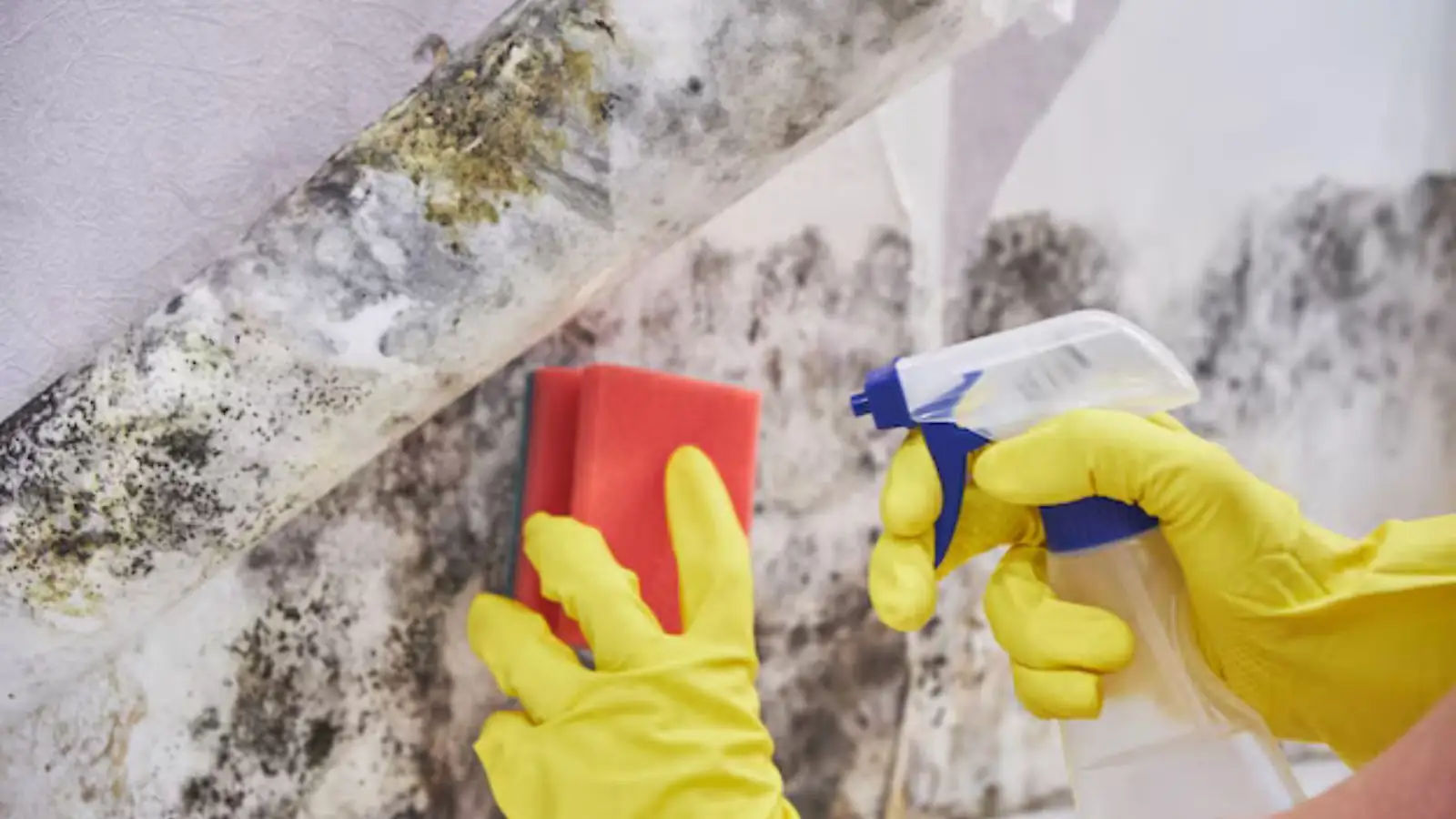
Dark spots on the wall or a musty smell that comes back?
.People usually search for this as black spots in a corner, mold on the ceiling, a musty smell in a closet or a stain that returns after cleaning. All of it points to the same thing, which is moisture feeding growth on a surface.
The trade name for the fix is mold remediation. It is the controlled removal of mold and the correction of the moisture that fed it. This page explains how that works and what to expect.
Mold needs moisture, and that is where to start
.Mold is a type of fungus that grows on damp organic materials such as drywall paper, wood and carpet pad. It needs moisture, so the first question is always where the water came from. Cleaning the mold without fixing the leak only buys a short break before it returns.
This page does not make health claims. If you have health questions about mold exposure, ask a physician. Remediation work follows the ANSI/IICRC S520 standard, and you can ask any company whether its crews work to it.
Mold means moisture
.Call and describe it. The moisture source is part of the plan.
How mold remediation is done
.The order matters because mold spores spread easily.
Assess
.Crews find the source of moisture and map the affected area.
. Contain
.Plastic barriers and negative air machines with HEPA filtration keep spores in the work area.
. Remove
.Affected porous materials are removed and bagged, and surfaces are cleaned with HEPA vacuuming and wiping.
. Dry and verify
.The area is dried and moisture readings confirm the source is under control.
.
Inspection, testing and clearance
.These three words mean different things.
| Step | .What it is | .Who usually does it | .
|---|---|---|
| Inspection | A visual and moisture assessment of the area | Remediation company or an independent inspector. |
| Testing | Air or surface sampling for mold | Independent tester, often recommended for a neutral view. |
| Clearance | Testing after remediation to see if the area meets the goal | Independent tester when you want third-party confirmation. |
Some buyers, lenders and landlords ask for clearance testing. Ask whether your state licenses mold work and who can perform the testing. See structural drying and dehumidification for how the moisture is controlled.
Where mold shows up after a water loss
.Locations tell you what caused it.
Behind walls and baseboards
.From plumbing leaks or flood cuts that were not dried. See wall and drywall water damage.
Under carpet and pad
.From wet carpet left too long.
Crawl spaces and closets
.From humidity and poor ventilation.
If you find mold, do and do not
.Safe first steps.
- Do fix the source of moisture if you can, and keep the area dry. .
- Do not disturb large areas of growth, run fans that spread spores or use bleach on porous materials. .
- Do keep people with health concerns out of the area, and ask a physician about any health symptoms. .
- Do photograph the area and note when you first saw it. .
- Do ask any company about containment, HEPA filtration and the S520 standard. .
What affects the cost of mold remediation
.Scope and price are explained before work starts.
- Area affectedSquare feet of growth, and how far it spread. .
- MaterialDrywall, wood framing and carpet pad. .
- ContainmentBarriers, negative air and HEPA filtration. .
- TestingPre and post testing when required. .
- Source repairPlumbing or roof repair is separate. .
Mold from a covered water loss may be covered, and mold from neglect often is not, so check your policy and ask your insurer. Want your real number? Call (844) 950-6900.
Safety steps if you find mold
.Use common sense while you plan the work.
- Do not disturb or dry-brush growth, since that spreads spores. .
- Do not mix cleaning chemicals. .
- Keep the area closed off and turn off fans that blow across it. .
- Wear gloves, eye protection and a respirator for any minor cleaning. .
- Ask a physician about any health questions. .
Mold in a dry valley climate
.Wasco has dry summers, so mold here is nearly always tied to a plumbing leak, an AC drain, a roof leak after winter rain or a closed-up wet area. NOAA normals show about 5 inches of the 6.8-inch yearly rainfall falling from December through March.
Check ceilings and walls after the first heavy rain of the season. ZIP 93280 is the primary coverage area, and the same service reaches Lost Hills, Delano and McFarland.
Mold Remediation questions in Wasco
.Testing is often done by an independent tester so there is a neutral result. Remediation crews can coordinate around it.
Small surface spots on hard surfaces can sometimes be cleaned, but larger areas or growth in porous materials need containment.
It can if the moisture source remains. Fixing the source and drying the area is the way to lower the risk.
Sometimes when it follows a covered water loss. Check your policy.