
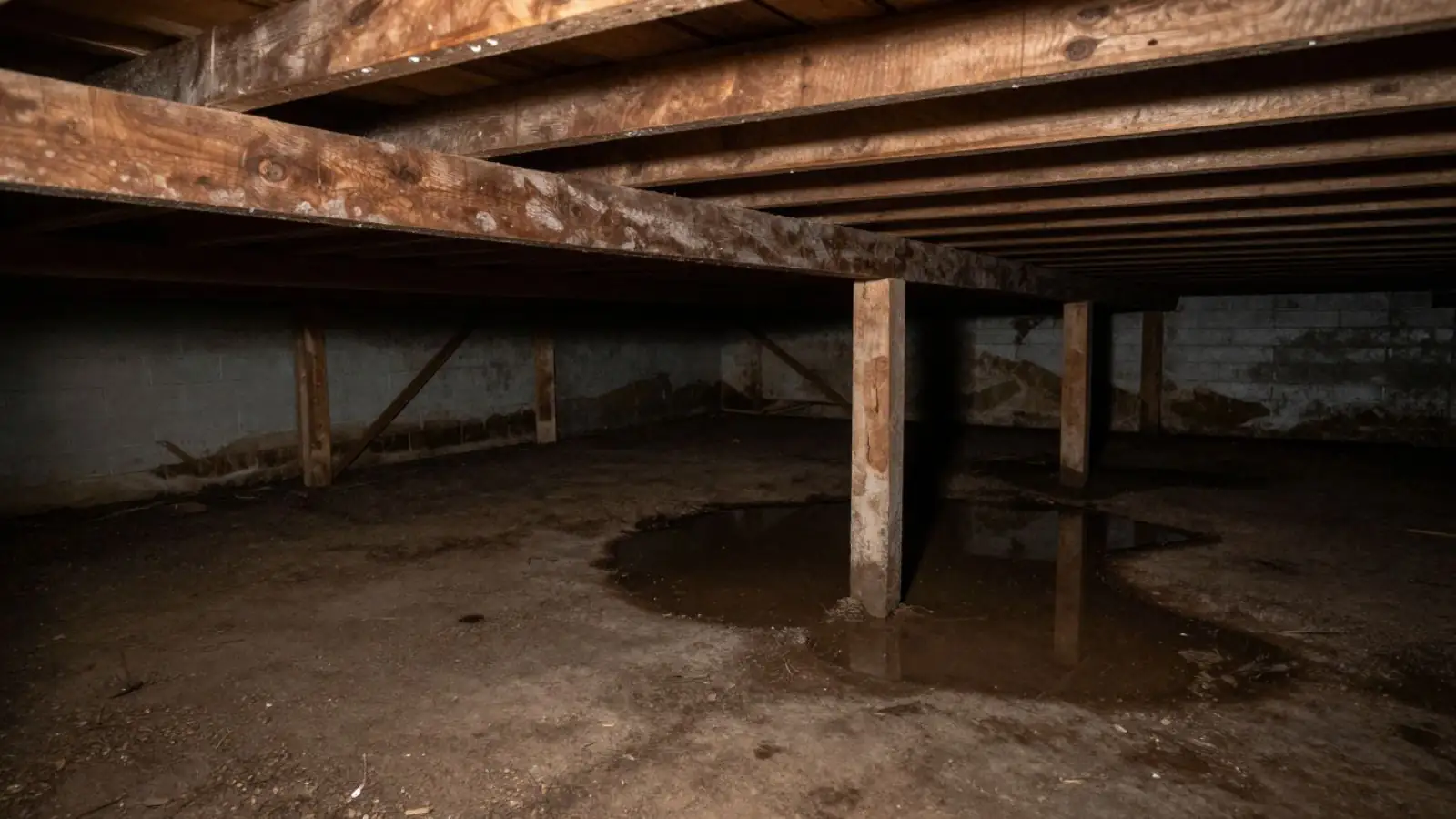
Crawl space water damage under a raised floor
.A crawl space is the shallow space between the ground and the floor of a raised house. When water gets in, it soaks insulation, wets floor joists and subfloor and feeds mold and rot. Because nobody goes down there, the problem can run for months before a musty smell or a spongy floor shows up.
This is not usually a middle-of-the-night call, but the 24/7 line is open if water is spreading or a pipe has failed under the house.
Signs the crawl space has a moisture problem
.You can often spot these from inside the house.
Musty odor
.A persistent damp smell in rooms above the crawl space.
Cold or soft floors
.Wet insulation holds moisture against the subfloor, and wood can soften.
Sagging insulation
.Wet batts fall away from the joists.
Visible water or stains
.Pooling on the soil or dark stains on joists and the foundation wall.
Standing water under the floor
.Call the 24/7 line. We can help plan extraction and drying.
Where crawl space water comes from
.Treat the cause and the drying works. Treat only the drying and the water returns.
| Source | .How it shows up | .Fix | .
|---|---|---|
| Plumbing leak | Drips at fittings, wet soil under a line | Plumber repairs the line. See burst pipe water damage for failures of that kind. |
| Irrigation and drainage | Water pooling near the foundation after watering or storms | Regrade or redirect water away from the house. |
| Missing or torn vapor barrier | Damp soil, condensation on joists | Replace or repair the barrier. |
| Humid air through vents | Condensation without standing water | Dehumidify and seal or control vents. |
How crawl space water damage is cleaned up
.Find the source
.Crews check plumbing, drainage and the vapor barrier first so the problem does not return.
. Extract
.Standing water is pumped out with small submersible pumps.
. Remove wet insulation
.Wet batts are bagged and removed because they hold moisture against wood.
. Dry and verify
.Dehumidifiers and air movers run while joist moisture is logged until dry.
.
Why this matters for the floor and for mold
.A joist that stays damp loses strength and invites decay. Wood at a persistently high moisture content is where mold and fungal growth start. Crews measure the wood with a moisture meter instead of guessing, and if growth is visible, see mold remediation for how it is contained and removed.
Many Wasco yards are irrigated, so overspray near foundation vents can be a quiet cause. Check for wet soil by the vents after sprinklers run.
What to look at before you crawl under the house
.Wear gloves, a respirator rated for dust and a light, and keep your phone for photos. Check for exposed wiring, standing water near it and animals. If you see standing water or the soil is wet near electrical lines, stay out and call.
Look for pipes with drips, insulation hanging down, and damp patches on the soil. A moisture meter on the joists tells you how bad the problem is.
Vapor barriers and ventilation
.A vapor barrier is a plastic sheet that covers the soil in a crawl space to keep ground moisture from rising into the air under the house. If it is torn, missing or lifted, moisture reaches the wood. A crew can recommend repair or replacement as part of the fix.
Vents, ground cover and drainage all play a part, and the right mix varies by house.
What affects the cost
.Scope and price are explained before work starts.
- AccessA tight crawl space with low clearance takes longer. .
- Water depthStanding water needs pumps, damp soil needs dehumidifiers. .
- InsulationWet batts are removed and replaced. .
- Wood moistureDrying days depend on joist and subfloor readings. .
- Source repairPlumbing or drainage fixes are separate. .
Insurance may cover sudden water loss, and gradual seepage or lack of maintenance is often excluded. Check your policy. Want your real number? Call (844) 950-6900.
The standard behind the work
.The reference standard for professional water damage restoration is ANSI/IICRC S500. It sets out how water is categorized, how affected materials are judged and how drying is confirmed with readings. When you compare companies, ask whether the drying plan follows it and ask to see the readings.
Raised foundations around Wasco
.If your home sits on a raised foundation, the crawl space is your responsibility to inspect. The City of Wasco building department can tell you what applies to your lot and what permit rules exist for foundation work.
A quick check after the first winter rain is worth the effort. Look for wet soil and damp insulation along the north wall and near any hose bib or downspout.
Crawl Space Water Damage questions in Wasco
.Yes. Crawl space extraction, insulation removal and drying are part of the service. Access and clearance affect time and equipment.
Not always. Humid air alone can cause it, but it still means moisture is present. A moisture meter and an inspection show whether it is a leak or humidity.
If the barrier is torn or missing and the soil is damp, replacing it is part of a lasting fix. A restoration crew can advise on this.
Sudden leaks often are and seepage often is not. Check your policy and ask your insurer.