
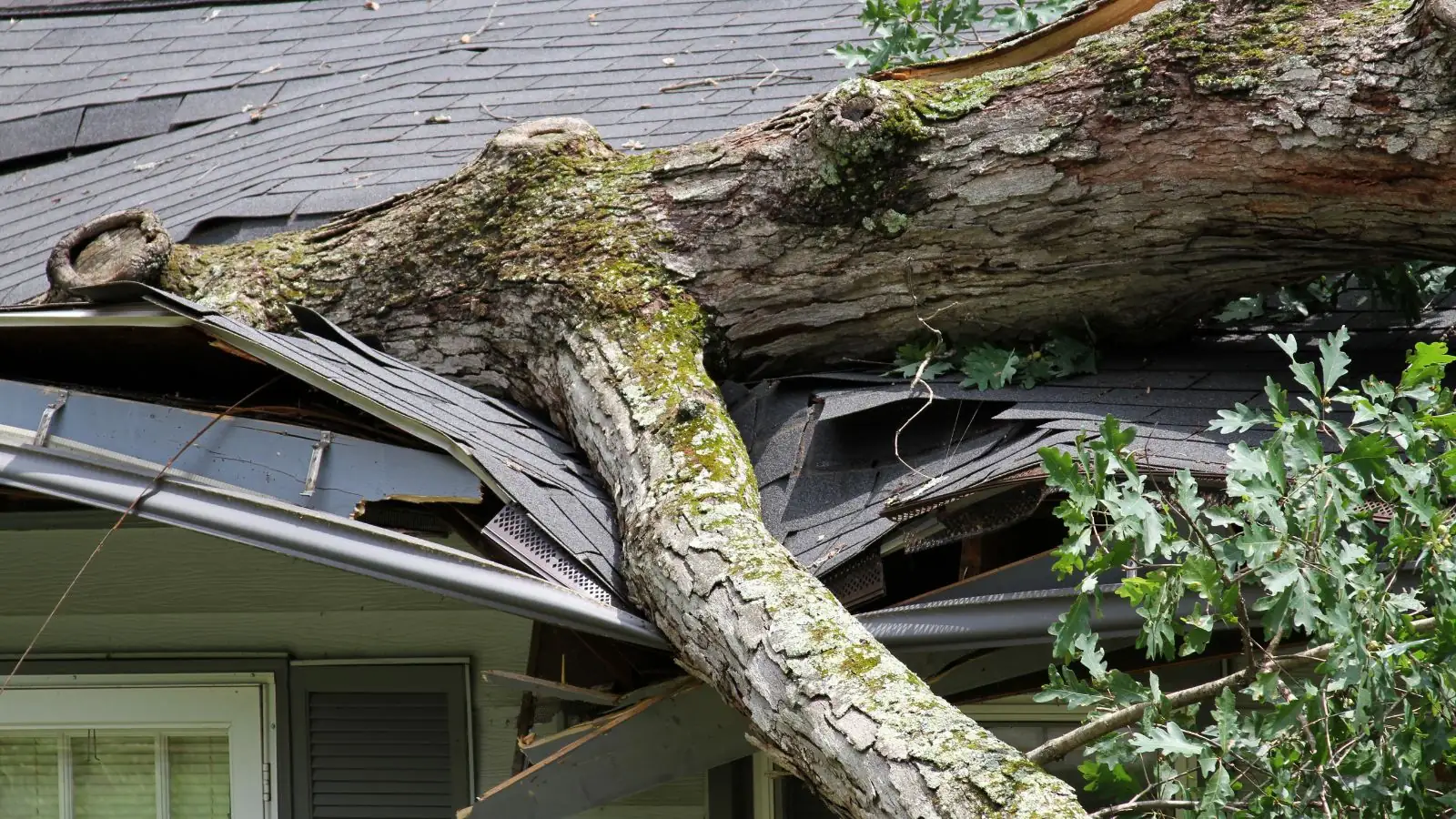
Storm water damage emergency after the wind and rain
.Storm water damage is the wetting of a building by rain that wind pushes through the roof, windows, siding or doors. It is an emergency while the weather lasts, and the 24/7 line is open at night, on weekends and on holidays. First, stay safe. Do not go onto a wet roof or into a room with sagging ceilings or downed lines.
If it is safe, cover openings with plastic sheeting or a tarp, move furniture away from wet areas, and photograph the damage. Same-day response is the goal when crews are available during widespread storms.
How this differs from flooding
.Storm water damage comes from rain entering through the building envelope. Rising water outside the house is a flood, and that is a different cleanup with different insurance rules. See flood damage cleanup for the flood case.
A plain roof leak that shows up only as a ceiling stain is covered on the ceiling water damage repair page, which also owns roof leak damage.
Storm water inside
.Call the 24/7 line once it is safe, and tarp or cover openings if possible.
Where storm water gets in
.Valley storms hit the weak points first.
Roof and flashing
.Lifted shingles, failed flashing and clogged valleys.
Windows and doors
.Wind-driven rain past failed seals and thresholds.
Gutters and downspouts
.Overflow runs behind siding and into walls.
Trees and debris
.A fallen limb can open the roof directly.
Storm damage cleanup in order
.Make it safe
.Power, gas and structural safety are checked before work.
. Extract and cover
.Water is removed and openings are temporarily covered.
. Dry
.Dehumidifiers and air movers dry walls, ceilings and floors.
. Repair
.Roofers and contractors fix the opening, then interior repair follows.
.
How the work is measured
.The ANSI/IICRC S500 standard is the recognized reference for water damage restoration. Its core idea is simple: a structure is dry when readings say so, not when it feels dry. Ask for the drying log before you sign off on a job.
Safety steps after a storm
.Stay safe first, then limit the damage.
- Stay off the roof and away from downed power lines. .
- Do not enter rooms with sagging ceilings or standing water near outlets. .
- Turn off power to wet areas if you can do it safely. .
- Cover openings with tarps or plastic if it is safe to do so. .
- Photograph damage from the ground and inside before cleanup. .
Storm patterns in the Wasco area
.NOAA climate normals for Wasco put annual rainfall near 6.8 inches, with about 5 inches between December and March. Storms are concentrated in winter, and the National Weather Service Hanford office issues the forecasts for the area.
Because rain is infrequent, roofs and gutters can go months without being tested. Check flashing and clear gutters in the fall, before the first storm arrives.
What to photograph and protect after a storm
.Do this once it is safe to go outside and inside.
- Photograph roof damage from the ground, and do not climb up yourself. .
- Photograph every wet room, including ceiling stains and wet insulation if you can see it. .
- Move electronics and furniture away from leaks and lift rugs. .
- Write down the time the storm hit and when you first saw water inside. .
- Keep receipts for tarps, plastic sheeting and any emergency repair. .
Why wind-driven rain gets further than you expect
.Wind pushes rain sideways under siding, around window frames and into the gap between roof and wall. Water then runs down inside wall cavities and soaks insulation without a visible stain for days.
That is why a post-storm moisture check matters even when nothing looks wrong. A thermal camera on the interior side of exterior walls can show wet insulation that a visual check misses. Drying that insulation early avoids the slow mold problem that appears weeks later.
Temporary protection until the roofer comes
.A tarp or board-up keeps rain from re-entering while the permanent repair waits for a roofer's schedule. After a widespread storm roofers are busy, so temporary protection matters. Ask the crew or your roofer about securing it so wind does not lift it.
Keep the interior drying running even if the roof is covered. Wet materials stay wet until they are dried, whatever is above them.
What affects the cost of storm damage cleanup
.Scope and price are explained before work starts.
- Where water enteredRoof, windows or walls. .
- Area wetNumber of rooms reached. .
- Temporary protectionTarps and board-up while repairs are scheduled. .
- DryingEquipment days based on moisture readings. .
- RepairInterior and exterior repairs after drying. .
Many homeowners policies cover wind-driven rain damage when the roof or wall was opened by the storm. Policies differ, so ask your insurer. Want your real number? Call (844) 950-6900.
Storm Water Damage questions in Wasco
.Yes. The dispatch line is open 24 hours a day. During widespread storms demand rises, so call early. There is no promised arrival time.
Roofers repair roofs. Restoration dries the interior and coordinates with the repair trades.
Often when the storm damaged the building and rain followed. Flood is separate. Check your policy.
The opening, the wet areas, damaged contents and the outside of the building before anything is moved.