
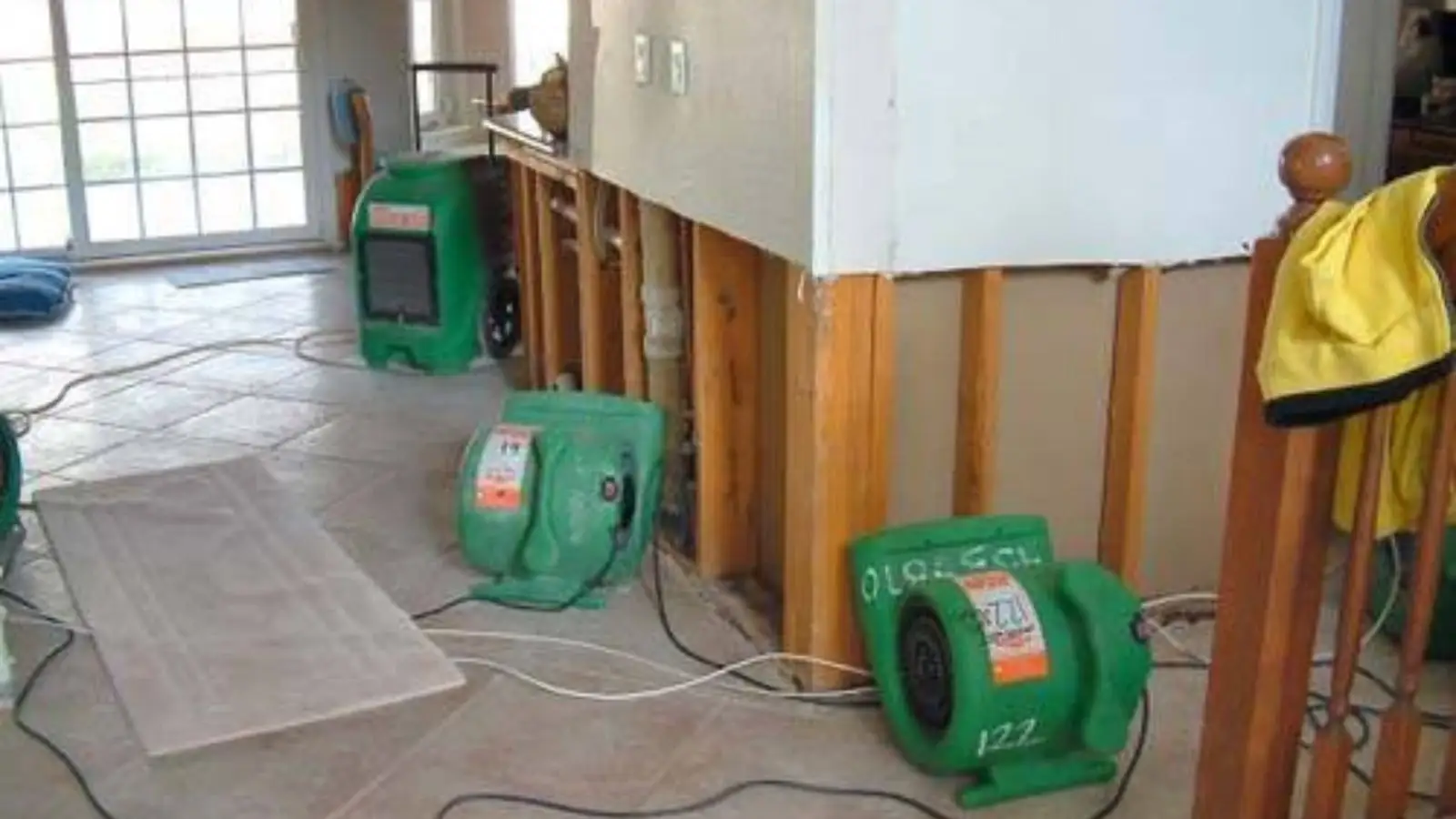
Drywall water damage: wet inside before it looks wet
.Drywall is gypsum between paper faces, and it soaks up water like a sponge. Bubbling paint, a soft spot, a stain that spreads or a baseboard that pulls away all mean water has reached the wall. The cavity behind may be wet even when the surface looks fine.
This is not always a night call, but the 24/7 line is open if water is running down a wall or a pipe is leaking inside it.
What the wall tells you
.A guide to what you see.
| Sign | .What it often means | .Typical response | .
|---|---|---|
| Bubbling or peeling paint | Active or recent moisture | Meter the wall, open if wet. |
| Soft or crumbling drywall | Saturated board | Cut out and replace. |
| Brown stain with a ring | Old or repeated leak | Check for a source, test moisture and monitor. |
| Musty smell with dark spots | Possible mold | See mold remediation. |
How a wet wall is dried
.Meter and image
.Moisture meters and thermal imaging map the wet area.
. Flood cut or drill
.A flood cut removes the bottom of the board, or ports let air into the cavity.
. Dry the cavity
.Air movers and dehumidifiers dry framing and insulation.
. Repair
.New drywall, tape, texture and paint match the room.
.
Drywall wet from a supply line in the wall
.A pinhole leak inside a wall can run for weeks. Crews trace the wet area up and down the wall with a thermal camera, then open it to find the source and dry the cavity. A plumber fixes the pipe.
For the pipe side of the problem, see burst pipe water damage.
Drywall wet from a roof or window leak
.A leak at a window or from the roof runs down inside the wall and soaks insulation and the drywall around it. The stain may appear a foot or more below the real entry point. Peeling paint beneath a window sill is the common sign.
Crews check the wall with a meter from top to bottom and open the lowest wet section. Wet fiberglass insulation is replaced because it stays wet against the framing.
Before you cut into a wet wall
.A few checks first.
- Turn off power to the circuit if outlets or switches are in the wet wall. .
- Locate pipes and wiring before you open the wall. .
- Wear gloves, eye protection and a dust mask. Older drywall and paint may contain materials that should not be sanded. .
- Photograph the wall before and after you open it. .
- If the home is older, ask about testing before disturbing paint or plaster. .
Texture, paint and the finishing details
.After the board is replaced and taped, the new section is textured to match the wall. Matching texture is as much about technique as product, and a good finish needs primer and paint across the whole wall so the repair does not show.
Cabinets, tile and trim can complicate the work, and pulling and resetting them is part of the estimate.
What drives the cost of drywall repair
.Scope and price are explained before work starts.
- Linear feet of wallHow much board is removed. .
- InsulationWet insulation is replaced. .
- Texture and paintMatching the existing finish. .
- Drying daysEquipment and monitoring. .
- AccessCabinets, tile and trim in the way. .
Insurance may cover resulting wall damage when the cause is sudden. Check your policy. Want your real number? Call (844) 950-6900.
What the S500 standard expects
.ANSI/IICRC S500 is the industry standard for water damage restoration. It expects the source to be identified, the water categorized, wet materials documented and drying verified with measurements. Those same records also support an insurance claim.
Older walls in older Wasco homes
.Homes near the original Deweyville townsite are likely to be older than newer subdivisions, and some older walls may be plaster or have older paint. Ask whoever inspects your home about the materials before cutting, and test for lead and asbestos if the home is old enough to warrant it.
Wall and Drywall Water Damage questions in Wasco
.If it is clean water and caught fast, sometimes. Soft or crumbling board is replaced.
Usually 12 to 24 inches above the wicking line, as readings dictate.
It can if the cavity stays wet. Drying quickly lowers the risk.
Often when the leak is sudden. Check your policy.