
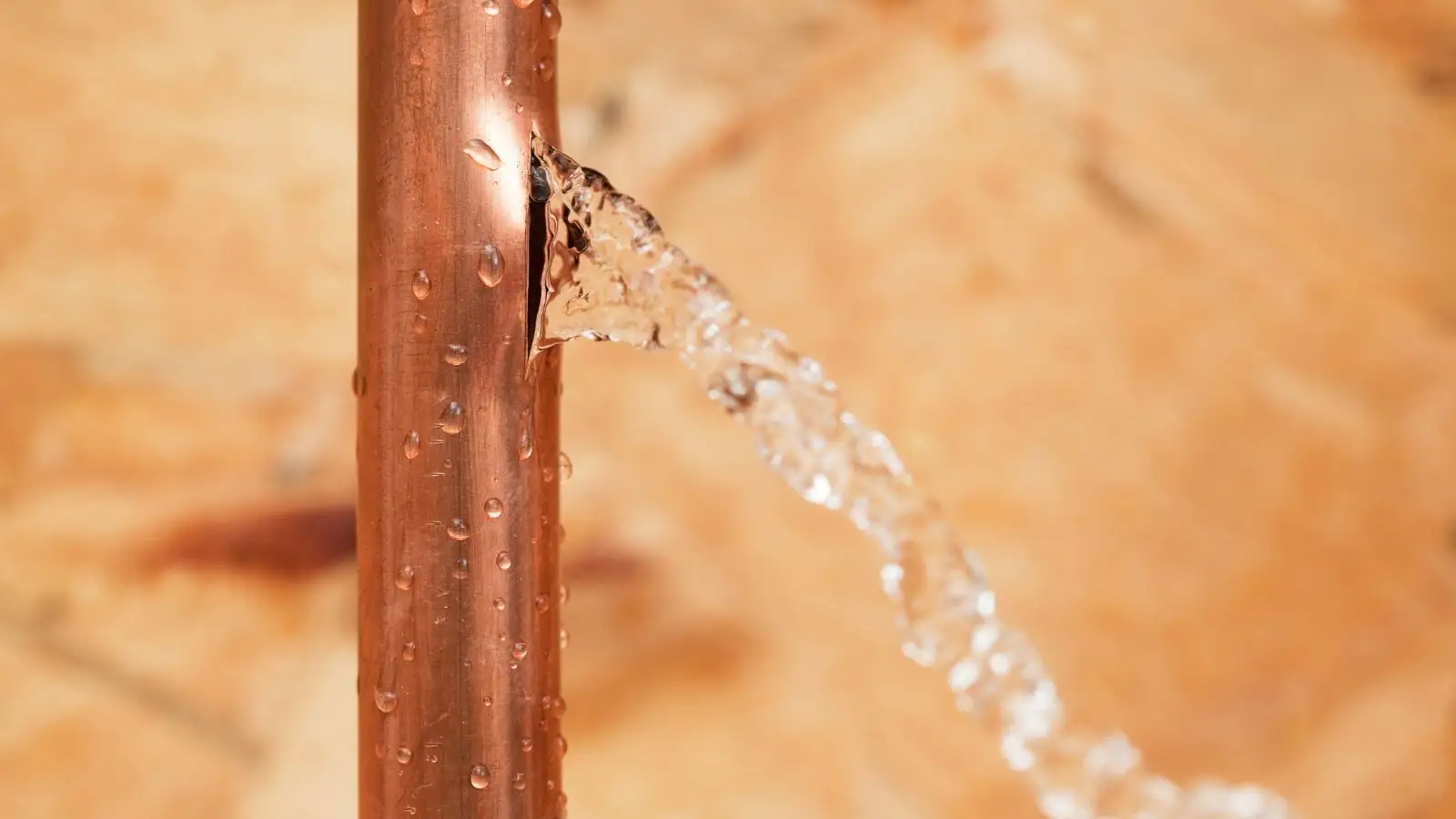
Why vacations are risky for water damage
.A leak that happens while you are home gets noticed in minutes. The same leak while you are away can run for days, and a washing machine hose or a water heater can put a large volume of water into a house in that time. The goal of a pre-trip routine is to remove the pressure that makes leaks happen.
Most of the steps take seconds. Do them as a habit before any trip of more than a day or two.
The fifteen-minute checklist
.Do these before you lock the door.
| Item | .What to do | .Why | .
|---|---|---|
| Main water valve | Shut it off for a long trip | Removes pressure from every line. |
| Washing machine | Turn off both supply valves | Hoses are a common failure. |
| Water heater | Set to vacation or shut off the cold supply | A failed tank has no feed. |
| Dishwasher and ice maker | Close the supply valves | Slow leaks run unnoticed. |
| Irrigation | Check timers and leaks | A broken sprinkler can soak a foundation. |
| AC drain | Check that the condensate line drains | A clogged line overflows. |
Home to a wet floor?
.Shut off the main valve and call. Drying should start the same day.
Hoses and fittings
.Rubber washing machine hoses and old plastic fittings are the usual culprits. Replace them with braided stainless hoses if they are more than a few years old, and write the install date on them. Look at hoses for bulges, cracks and rust around the fittings.
For the appliance side of the story, see appliance leak water damage.
The water heater
.A water heater that leaks while you are away will keep filling from the supply. Shutting off the cold supply valve at the heater stops the refill. Check the drain pan and the area around it for stains. Tanks that are old or rusting are the ones to watch. See water heater leak cleanup for what a failure looks like.
Ask someone to check in
.A person beats any gadget.
- Ask a neighbor or friend to walk through the house every few days. .
- Leave them the location of the main water shutoff and your phone number. .
- Tell them what a leak looks like and what to do. .
- Consider leak sensors with phone alerts. .
- Give them a number to call for emergency water removal. .
Leak sensors and smart shutoffs
.A leak sensor is a small battery device that sounds an alarm or sends a phone alert when it senses water. Place them under sinks, behind the washer and the dishwasher, and near the water heater. A smart shutoff valve on the main line can close automatically. These cost far less than a flooded floor.
No gadget replaces a shutoff you actually use. If you are away more than a few days, close the main.
Before a short trip
.For a weekend, the minimum is the washing machine valves, the dishwasher and a look at the water heater. Check that the AC condensate line drains and that nothing is dripping under sinks. Set irrigation timers and make sure the system has no broken heads.
Do the walk-through a day ahead so you have time to fix what you find.
For a long absence
.Close the main valve and open one faucet to relieve pressure. Set the water heater to its vacation setting or turn off the cold supply. Ask someone to check on the home weekly and give them your phone number and the shutoff location.
If you winter elsewhere, keep indoor temperature set so the house is not too hot, and check the roof after storms.
Choose the right level for the trip
.Longer trips need more steps.
| Trip length | .Minimum steps | .Add | .
|---|---|---|
| 1 to 3 days | Washer and dishwasher valves | Check AC drain. |
| 4 to 14 days | Main valve off, heater set low | Neighbor check-in. |
| More than 2 weeks | All of the above | Leak sensors, regular visits. |
If something goes wrong anyway
.Shut off the main valve and electricity to wet areas if you can do so safely. Photograph the damage before moving anything. Call for extraction and drying. See water extraction for what happens first. The faster water is removed the more can be saved.
Roof, gutters and the outside
.Water damage can start outside. Clear gutters and downspouts before the rainy season. Look at roof flashing and vents from the ground. Make sure grading directs water away from the foundation and that irrigation heads do not spray the walls.
After a storm, look at ceilings and the attic if you can reach them safely.
Make a one-page house plan
.Write the location of the main water shutoff, the water heater shutoff, the electrical panel and your plumber's number on one page. Tape a copy near the panel and share one with whoever checks on the house. In an emergency, you will not want to hunt for these.
Add the 24/7 number for emergency water removal so a house-sitter does not lose time searching.
One more practical point
.Take photos of the house before you go: the water heater, the washer hookup, the shutoff valves and each room. If something does happen, you have a record of the condition of the home before the loss, which helps an adjuster and helps a restoration crew see what changed. Store the photos in your phone with the date and keep a copy in the cloud so you can reach them from anywhere.
What the S500 standard expects
.ANSI/IICRC S500 is the industry standard for water damage restoration. It expects the source to be identified, the water categorized, wet materials documented and drying verified with measurements. Those same records also support an insurance claim.
What to know in Wasco
.Wasco summers are long and dry, with NOAA normals showing almost no rain in July and August, and air conditioners run for long hours. A clogged AC drain or a stuck water heater is a likelier source of a summer leak than weather. Winter rain from December through March can test roofs, so look at the ceilings when you get back. For permit questions about repairs, ask the City of Wasco building department.
If your home is in a nearby town, the details differ a little. See the pages for Lost Hills and Delano for ZIP codes, distances and what to tell the dispatcher.
Questions Wasco homeowners ask
.For a trip of several days, yes. It removes pressure from the whole house.
Usually not in Wasco, since hard freezes are not routine, but check the National Weather Service Hanford forecast for overnight lows before a winter trip.
They are inexpensive and give an early warning. Place them where leaks start.
Shut off the main valve, keep out of water near electricity, photograph the damage and call the 24/7 line.