
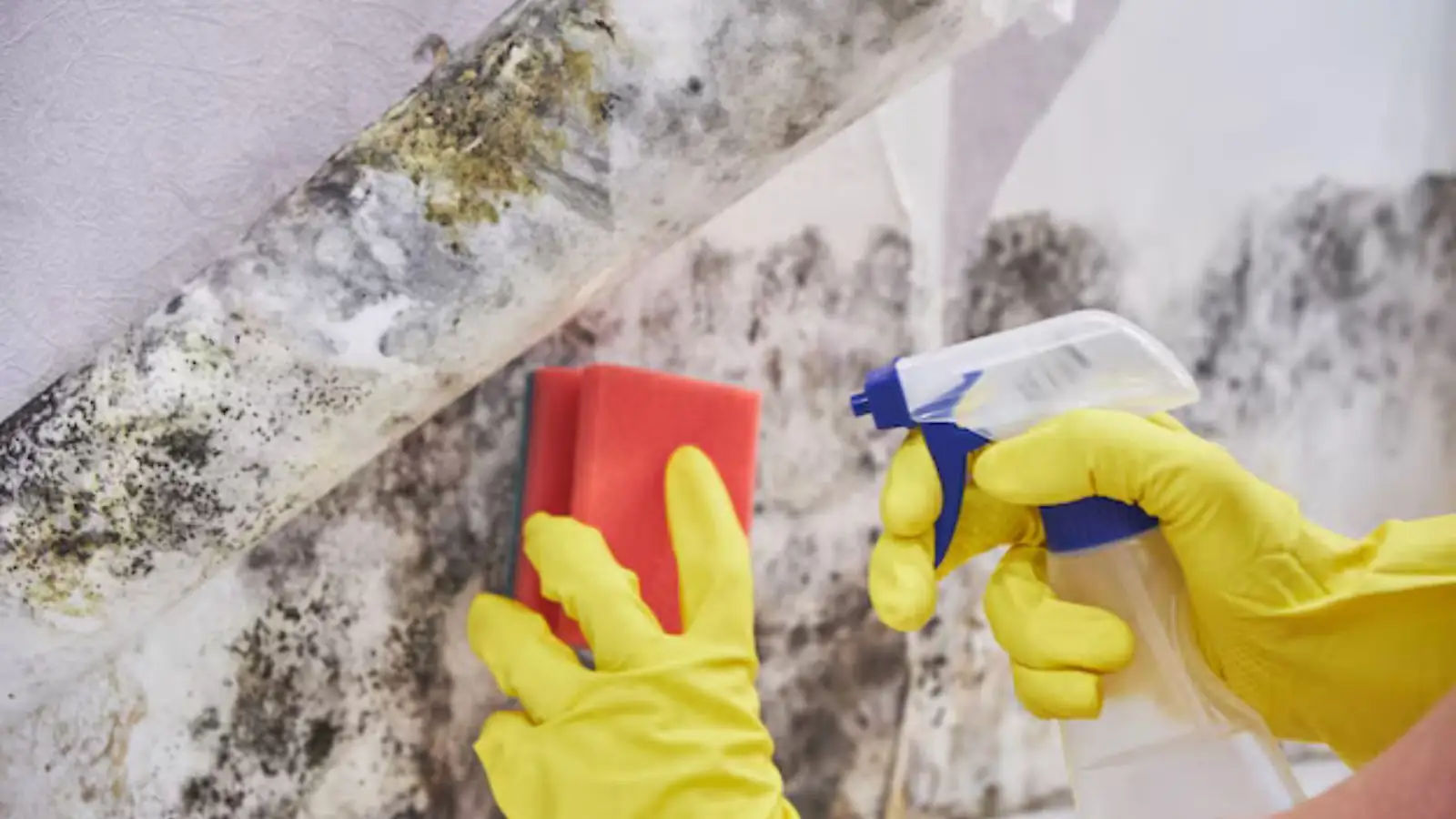
Two words, one root cause
.Mold and mildew are both fungi that need moisture. Mildew is the term often used for flat, powdery or downy growth on surfaces such as shower walls, windowsills and fabric. Mold is the broader word, and it often describes thicker, fuzzier or darker growth that can penetrate porous materials.
In a house the practical question is not which word applies but whether the growth is on the surface or inside the material.
How they usually differ
.Tendencies, not rules.
| Trait | .Mildew | .Mold | .
|---|---|---|
| Texture | Flat, powdery or downy | Fuzzy, slimy or raised. |
| Color | White, gray or yellowish | Black, green, blue or other. |
| Where | Surfaces in humid spots | Surfaces and deeper in porous materials. |
| Smell | Musty | Musty, sometimes stronger. |
| Cleaning | Often surface cleanable | May need removal if in porous materials. |
Growth keeps returning?
.Call for a moisture check. Scope and price are explained before work starts.
Why color is a poor guide
.Color depends on the species, the material and the age of the growth. Black does not always mean dangerous, and white does not always mean harmless. This guide makes no health claims. Treat any visible growth as a sign that moisture is present and find out why.
A lab can identify species. For a homeowner, the more useful test is whether the growth is small, on a hard surface and returns after cleaning.
What to do about surface growth
.For small areas on hard surfaces.
- Wear gloves, eye protection and a respirator. .
- Clean with detergent and water, then dry completely. .
- Do not mix cleaning chemicals. .
- Find and fix the source of moisture. .
- Stop and call a professional if it spreads or returns. .
Where it matters most
.Growth on grout and caulk is usually a cleaning and ventilation problem. Growth on drywall, ceiling texture or inside a closet suggests a leak or a humidity problem that needs a closer look. See AC leak water damage and wall and drywall water damage for common wet sources.
Humidity and the home
.Indoor relative humidity above roughly 60 percent for long stretches encourages growth. A cheap hygrometer shows your level. Run exhaust fans, fix leaks promptly and avoid drying laundry indoors without ventilation.
In dry months in the valley, humidity indoors is often low, which is why persistent growth usually points to a specific leak.
How they form
.Both start when spores land on a damp surface with something to eat. Spores are always present in air, so the question is never whether they exist but whether the conditions let them grow. Warm, damp and still air gives them the best start.
Bathrooms, kitchens, laundry rooms and basements are the usual places because they are wettest. Closets on exterior walls and rooms with poor airflow follow.
Why the difference matters less than the cause
.Names help with conversation, but the work is the same: dry the area, remove what cannot be cleaned and fix the source. A pro will not need you to label it, and a lab test is rarely needed to decide what to clean.
What matters is the material. Growth on tile is a cleaning job. Growth in drywall is a removal job.
What to do by location
.Match the response to the surface.
| Where | .Usual action | .See also | .
|---|---|---|
| Tile, glass, sealed tub | Clean, dry, improve ventilation | Shower guide. |
| Painted drywall, small patch | Clean, dry, watch it | Wall and drywall repair. |
| Ceiling or wall with stains | Find the leak, open and dry | Ceiling repair. |
| Crawl space or attic | Moisture control and professional help | Crawl space guide. |
Prevention you can do this week
.Fix any dripping faucets or supply lines. Use exhaust fans and clean their grilles. Keep furniture a few inches from exterior walls. Check under sinks for dampness. Use a small hygrometer to watch humidity in the bathroom and bedrooms.
Dehumidifiers help in damp rooms. Empty the tank or connect a drain so it keeps running.
Call a professional when
.Do not tackle these yourself.
- Growth covers a large area or spreads quickly. .
- The material is soft, spongy or crumbling. .
- The moisture source is unknown. .
- The same spot returns after cleaning. .
- Someone in the home is bothered by the smell. .
What a cleanup visit looks like
.A crew checks readings, finds the source, protects the surrounding area and removes affected material. See mold remediation for the full process. Scope and price are explained before work starts, so you can say yes or no with the facts.
A quick home check
.Press a damp cloth lightly on a small patch of surface growth. If it wipes off easily and the surface looks clean, it was likely on the surface. If the stain stays, the material may be stained or the growth may be inside it. This is not a test for species, only a way to see how deep the problem goes.
Take photos before and after so you can compare later.
Fabric, wood and paper
.Mildew often shows up on shower curtains, books, leather and clothing stored in damp spaces. Wash fabric in hot water if the label allows, dry it completely and store it in a dry place. Books and paper are harder to save once they are damp for a long time.
Wood furniture can often be wiped and dried. Keep it away from exterior walls and out of damp basements.
Use numbers, not noses
.A hygrometer that shows humidity above about 60 percent for long stretches suggests a moisture problem. A moisture meter shows if a wall is actually wet. Both are inexpensive and give you facts to share with a contractor.
One more practical point
.If you are still unsure what you are looking at, take clear photos in good light and note the room, the material and how long you have seen it. Share them with a restoration company, which can usually tell from the photos and a moisture reading whether the area needs cleaning or removal. Photos also help if you later talk to a landlord or insurer.
The standard behind mold work
.The reference standard for mold remediation is ANSI/IICRC S520. It describes how conditions are assessed, how work areas are contained and how a result is judged. It is a standard for the work, not a promise about the future, so moisture control is part of any good plan.
What to know in Wasco
.NOAA climate normals for Wasco show about 6.8 inches of rain a year with a very dry summer. That means indoor moisture sources dominate, such as showers, cooling condensate and plumbing leaks. The City of Wasco building department can answer permit questions if you need to open walls.
If your home is in a nearby town, the details differ a little. See the pages for Lost Hills and Delano for ZIP codes, distances and what to tell the dispatcher.
Questions Wasco homeowners ask
.Often it sits on the surface and cleans easily, but any growth signals moisture. Fix the cause.
No. Color is not a reliable guide to species.
It can lighten surface stains but does not fix moisture or porous material.
When growth is large, in porous materials, or keeps returning.