
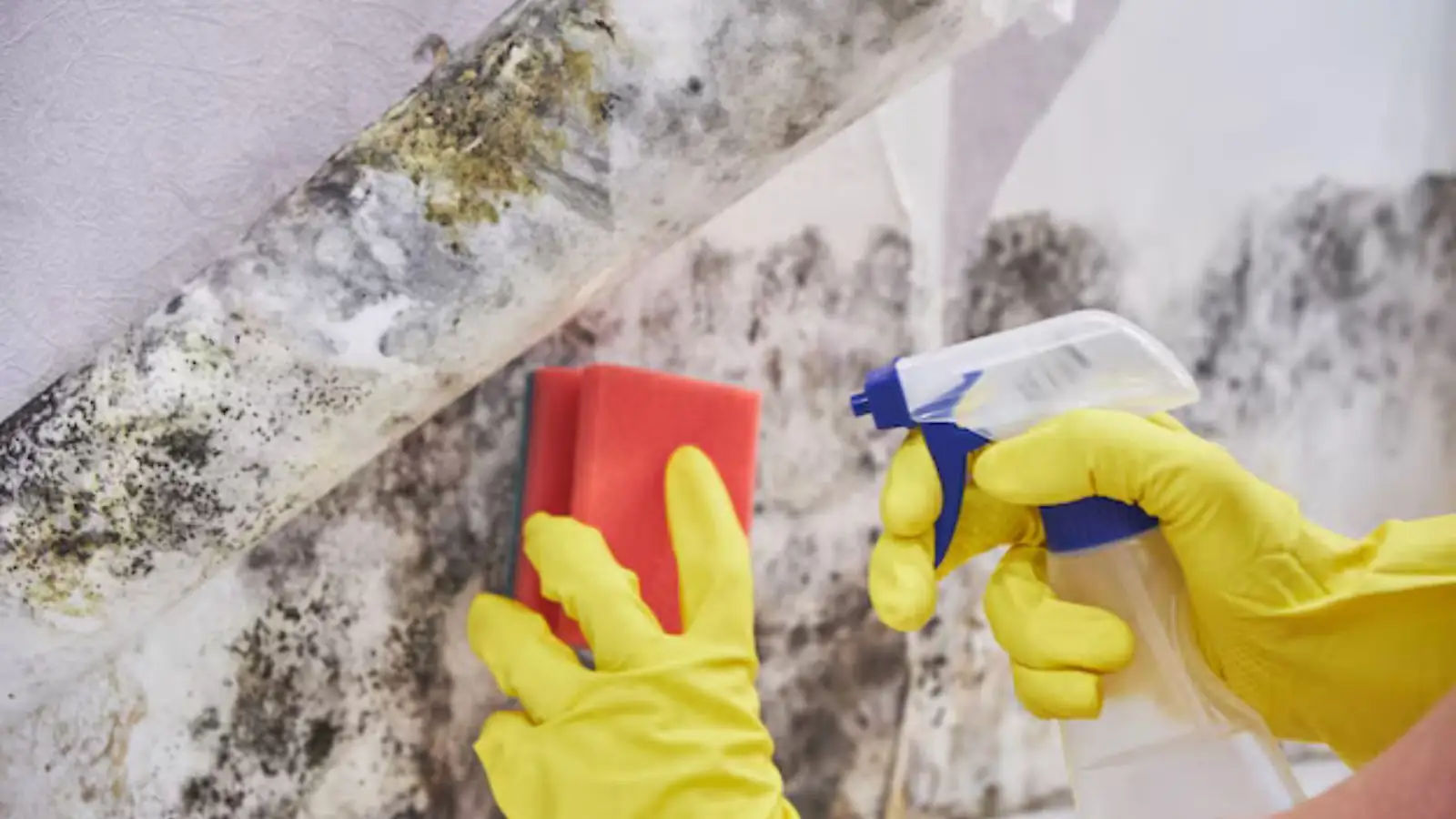
Why mold loves a shower
.A shower is warm, wet and often closed in, which is the combination mold needs. Soap film and skin cells on grout and caulk give it something to eat, and a bathroom without good ventilation lets humidity linger for hours. Dark spots on grout lines, caulk joints and the bottom of the curtain are the usual first signs.
Surface mold on hard, nonporous material often can be cleaned. Mold that is in the wall, behind the tile or on drywall outside the shower is a different job.
Cleaning surface mold in a shower
.Use these steps only for small spots on hard surfaces.
- Ventilate the room by running the fan and opening a window. .
- Wear gloves, eye protection and a mask rated for dust. .
- Scrub with detergent and water first, then with a cleaner labeled for mold, following the label. .
- Rinse, dry thoroughly and let the area air out. .
- Never mix bleach with ammonia or other cleaners, since the fumes can be dangerous. .
Do not use bleach on porous material such as drywall or wood, which can hold moisture and keep the problem alive.
Mold in the wall?
.If it is beyond a small surface spot, a moisture check and containment plan is the next step.
When scrubbing is not enough
.These signs mean the problem is deeper than the surface.
| Sign | .What it likely means | .Next step | .
|---|---|---|
| Mold returns within days | Moisture source remains | Check ventilation, caulk and leaks. |
| Soft or crumbling grout or drywall | Water behind the surface | Have the wall checked with a moisture meter. |
| Musty smell with no visible mold | Hidden growth | Ask a professional to inspect. |
| Mold covers a large area | Beyond a small spot | See mold remediation. |
Fix the cause or the mold comes back
.Mold returns when the moisture source remains. Common causes are a weak exhaust fan, cracked caulk, a leaking shower valve or a slow supply line leak in the wall. Replace failing caulk, run the fan for 20 minutes after each shower and squeegee the walls.
If you suspect a leak behind the wall, a moisture meter tells you whether it is wet. A wall that stays wet can lead to damage covered on the wall and drywall water damage page.
Why not just bleach it
.Bleach whitens surface stains and can make mold look gone while the roots remain in porous material. It also leaves water behind. On hard tile and glazed surfaces, a mold cleaner or detergent and scrubbing is usually enough. Vinegar is also sometimes used. Follow the product label whichever you choose.
No cleaner replaces fixing the moisture. If you are unsure what you have, treat it carefully and ask a professional.
Why showers grow mold so easily
.A shower is warm, wet and often poorly ventilated, which is the combination mold likes. Soap film and skin oils feed it, and grout and caulk hold moisture in tiny pores. Black spots at the base of the shower, along caulk lines and on the ceiling are common even in clean homes.
The fix is partly cleaning and partly reducing moisture. If you only scrub and leave the room damp, growth tends to come back within weeks.
Cleaning a small area safely
.For a patch on tile, glass or a sealed tub.
Protect yourself
.Wear gloves, eye protection and a mask rated for fine particles.
. Ventilate
.Run the fan and open a window.
. Scrub
.Use detergent and warm water with a stiff brush on grout and tile.
. Rinse and dry
.Rinse well and dry with a towel and a fan.
. Check again
.Look again in a week to see whether it returns.
.
Never mix bleach with ammonia or other cleaners, since the fumes can be dangerous.
Replace caulk and fix grout
.Mold in caulk often cannot be cleaned out, because it grows inside the material. Cut out the old caulk, let the area dry fully, and apply a fresh bead of mildew-resistant silicone. Regrout or seal cracked grout lines so water does not reach the backer behind them.
A bead of caulk that peels or gaps is a leak path. Water that gets behind tile soaks the wall and can lead to bigger repairs.
When it is more than a surface problem
.Signs the growth is behind the tile.
- Soft, spongy or discolored drywall next to the shower. .
- Tiles that sound hollow or feel loose. .
- A musty smell that stays after cleaning. .
- Stains on the ceiling or wall in the room below. .
- Growth that returns within days of cleaning. .
Habits that keep it away
.Run the exhaust fan during the shower and for 15 to 20 minutes afterward. Squeegee the walls, hang towels to dry and leave the curtain or door open. Fix a dripping showerhead or valve promptly.
If the fan is weak, noisy or vents into the attic, have it checked. See wall and drywall water damage repair if the wall next to the shower is already damaged.
Cleaning supplies that work
.A stiff brush, mild detergent and warm water handle most surface growth. Some people use white vinegar or a diluted bleach solution on hard surfaces, but never mix them with each other or with other cleaners. Rinse and dry, since leftover dampness invites growth to return.
Caring for the area afterward
.After cleaning, wipe the walls dry after each shower for a few weeks. Leave the door or curtain open to air out. Watch the corners and caulk line, since those are the spots that come back first. If it returns quickly, the problem may be moisture behind the surface.
Industry standard to ask about
.Professional mold remediation is guided by the ANSI/IICRC S520 standard, which covers assessment, containment, removal, cleaning and verification. Ask a company whether its scope follows it and how the result will be documented.
What to know in Wasco
.Wasco has dry summers and relatively little rain, so shower mold here is usually a ventilation and plumbing issue and not a weather one. NOAA climate normals for Wasco show about 6.8 inches of rain a year, and July and August are nearly dry.
Ask your city building department about any permit requirement before you remove and replace wall materials, and test for lead and asbestos in older homes before disturbing paint or tile.
If your home is in a nearby town, the details differ a little. See the pages for Lost Hills and Delano for ZIP codes, distances and what to tell the dispatcher.
Questions Wasco homeowners ask
.This guide does not make health claims. If you have health concerns about mold, talk to a physician. Wear protective gear when cleaning.
It is commonly used on hard surfaces. Follow the product label, and fix the moisture source.
If the caulk is stained through or cracked, replace it. Old caulk traps moisture.
When mold returns quickly, covers a large area or is in the wall or ceiling.